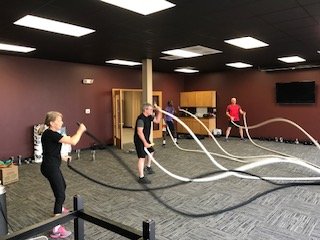
If you’re in your 50’s or 60’s you don’t need to be doing the same fitness program as someone who’s 25.
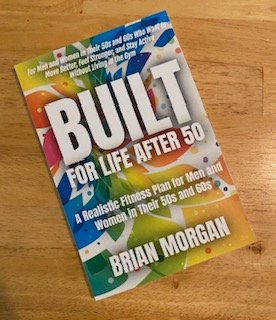
Built for Life After 50 is not another extreme workout plan. It’s a realistic, smart, and sustainable fitness plan designed specifically for men and women who want to move better, feel stronger, reduce everyday aches and pains, and stay active – without spending their lives in a gym.
It comes from a fitness coach in the over 50 club himself who understands the unique needs of bodies showing some “mileage”, some wear and tear.
Bodies that feel stiff. Or sore. Joints that sometimes feel a little cranky. Or you’ve had past injuries that didn’t totally go away.
· Build strength, balance, and mobility without breaking down your body
· Reduce back, knee, and joint pain through intentional movement
· Build core stability (without lots of crunches)
You CAN accomplish this without spending 5 or 6 days a week in the gym.

I saw my grandparents age poorly – my grandmothers both spent their last years in nursing homes and my grandfather, who had survived cancer twice, ended up in assisted living. Other family members had similar stories and I thought, is there a way to possibly prevent some of this decline?!
That’s when I decided to focus on those in their 40’s and 50’s, doing 45-minute workouts 3 times a week. My goal was to help people be more active NOW and to stay active in their retirement years.
But let’s be honest. Most people don’t like to exercise or to workout. Many would rather play golf or do some other activity. And that’s fine. The reason many people give is that working out takes too much time. And they either don’t have or don’t want to spend that much time. So that was the idea behind the time-efficient workouts – get a lot done in a short amount of time with “big bang” exercises that are also joint friendly.
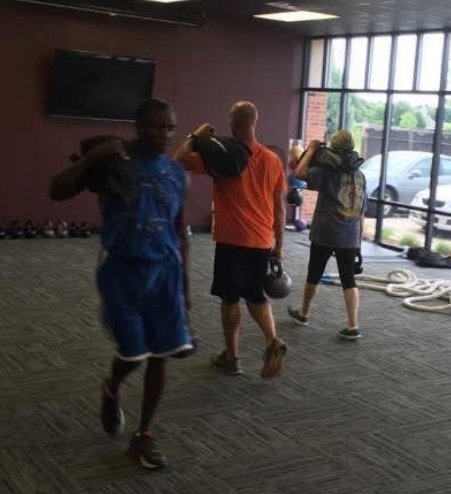
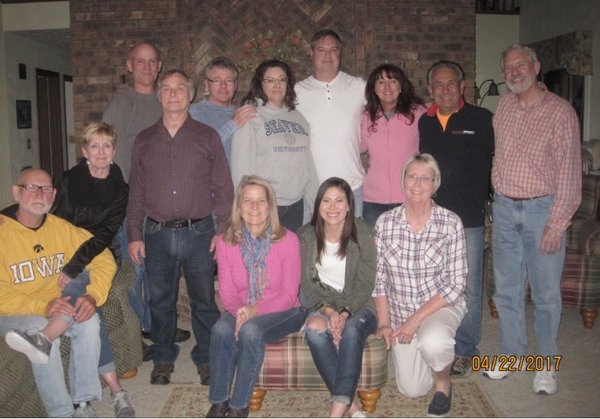
Ted started training with me in 2009. He and his wife (above photo) and his sister Julie and her husband trained with me for 3 years originally. I think the exercise message we’ve received over the years has been largely influenced by those who are training for competition – athletes both professional and recreational.
People who enjoy training!
YES - if you’re training for a marathon or half marathon, triathlon, endurance cycling or bodybuilding/fitness competition where you stand on a stage with very little clothing on, it takes LOTS of hours to achieve these goals. If just training for enhanced health and fitness, not as many. But you do have to put forth some effort to achieve any fitness related goal.
You need a focused plan that addresses the “main ingredients” –
Strength
Stability
Mobility
Yes, you need to do some cardio for heart health, circulation and endurance and it can help with fat loss. But if you’re not training for an endurance competition, you don’t need to spend hours doing it.
Work hard in our training sessions 2-3 days a week and go live your life – walk, run, bike, play golf or tennis. Swim, take a yoga class, go hiking or kayaking. Or take a dance class. Get some physical activity 6 days a week, if possible. Move often and in a variety of ways.
Most of us do the same activities over and over and adding in some variety – moving your body in different ways is good for your body AND brain.
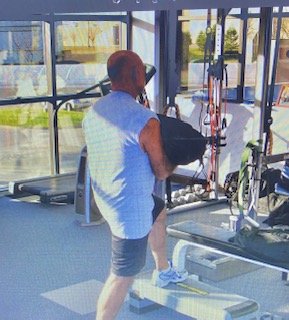
Ted worked with me prior to getting a hip replacement and for several years after. He's doing sandbag step-ups below.

This was former client Richard T. with his thick Georgia accent, talking about the ways we would work around some of his aches and pains by getting creative.
Richard was a business owner in his mid-50’s and like most adults he didn’t particularly enjoy going to the gym - he loved to golf. But he knew he needed to do some training because he owned a couple restaurants and he liked to eat. One of his restaurants was kind of iconic in the Atlanta area and Richard loved to consume their chicken wings and a cold beverage or two.
Richard wasn’t interested in looking like a fitness model - wasn’t training for any competition. But he knew he had to do something though and I got him to work hard enough that he noticed a little extra “pop” in his golf swing and some changes in his physique. Our training sessions usually lasted about 40 minutes and if you work hard enough you can feel a difference. Obviously, you need to make dietary changes for optimal health and fitness.
Crys learned about our group training from a friend. She had been to physical therapy for some back pain and told me she was willing to give it a try, but the look on her face said she had some doubts. She was about 63 at the time. I started her off very slowly – gradually building up her foundation. Over time she was able to do the same exercises everyone else was doing, because we took it slow, but more importantly…she kept showing up!
She worked with me about 3 years before I moved from the area and then she found another coach to work with. Now in her mid- 70’s she is still doing group training. Build a strong foundation and don’t stop.
I spent 10 years working in clinical settings and another 5 working in sports massage/assisted stretching studios with plenty of active individuals, in addition to my experience as a personal trainer, so I’m confident I can help you too. I’ve had plenty of injuries myself and I’ve learned how to work around them. Always searching for new ways or equipment to help those over 50 feel better, feel stronger and feel younger.
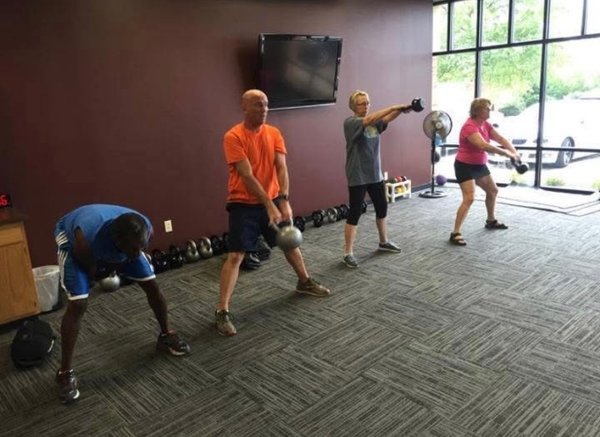
Hopefully, you can see some of my experience and passion for over 50 fitness and I firmly believe that in order to be active and feel your best in your 70's, 80's or beyond, you need to be training hard (and smart) in your 50's and 60's. Obviously, there are no guarantees in life.
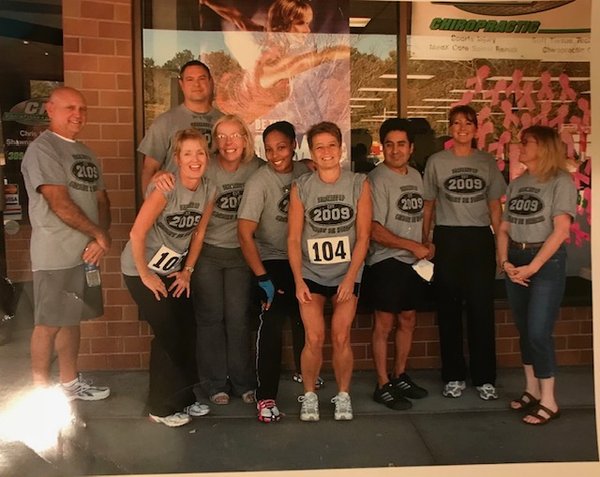
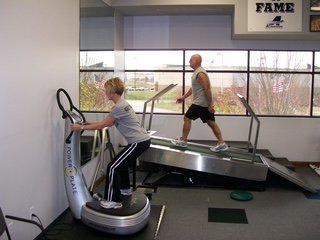
Julie achieved quite a transformation. Just prior to starting training she really adjusted how she was eating – eliminating processed foods, which helped with weight loss and when she added the training sessions it made a very noticeable difference. (#104 in above photo) Three good training sessions a week and being active on your own does work!